Best Practices for Cost-Effective Maintenance (Advanced Level)

- Description
- Curriculum
This 5-day advanced course is designed to equip professionals with the knowledge and skills to implement cost-effective maintenance strategies that optimize asset performance while minimizing operational expenses. Through a blend of theoretical insights, case studies, and practical exercises, participants will learn to balance maintenance costs with reliability, efficiency, and sustainability.
The course covers advanced concepts such as predictive maintenance, lifecycle costing, and resource optimization, enabling attendees to drive significant cost savings and improve organizational productivity.
Course Objectives
ü Understand the principles of cost-effective maintenance and its impact on organizational profitability.
ü Develop strategies to optimize maintenance budgets without compromising asset reliability.
ü Learn to implement predictive and condition-based maintenance techniques.
ü Master lifecycle costing and total cost of ownership (TCO) analysis for maintenance decision-making.
ü Enhance resource allocation and workforce productivity in maintenance operations.
ü Identify and mitigate risks associated with cost-cutting measures in maintenance.
ü Leverage technology and data analytics for smarter maintenance planning.
ü Foster a culture of continuous improvement in maintenance practices.
Discover more from Intelliness Canada
Subscribe to get the latest posts sent to your email.
-
1
 Day 1: Introduction to Cost-Effective Maintenance
1. Welcome and Course Overview
· Introduction to the course objectives and structure.
· Importance of cost-effective maintenance in modern industries.
2. Fundamentals of Maintenance Economics
· Key concepts: cost, reliability, and performance trade-offs.
· Understanding the financial impact of maintenance decisions.
3. Maintenance Strategies Overview
· Reactive, preventive, predictive, and proactive maintenance.
· Aligning maintenance strategies with organizational goals.
4. Case Study: Cost of Poor Maintenance
· Analyzing real-world examples of maintenance failures and their financial implications.
5. Interactive Discussion
· Participants share challenges and goals related to cost-effective maintenance.
-
2
Day 2: Predictive and Condition-Based Maintenance
1. Introduction to Predictive Maintenance (PdM)
· Principles and benefits of PdM.
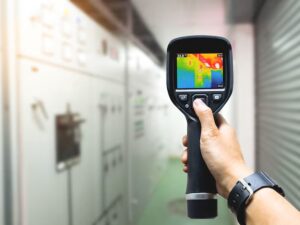
· Key technologies: vibration analysis, thermography, oil analysis, etc.
2. Condition-Based Maintenance (CBM)
· Implementing CBM systems and tools.
· Monitoring and interpreting equipment health data.
3. Data-Driven Decision Making
· Leveraging IoT and sensors for real-time monitoring.
· Using data analytics to predict failures and optimize maintenance schedules.
4. Hands-On Exercise
· Analyzing case data to identify failure patterns and plan maintenance activities.
5. Group Activity
· Developing a predictive maintenance plan for a sample asset.
-
3
Day 3: Lifecycle Costing and Total Cost of Ownership (TCO)
1. Understanding Lifecycle Costing
· Components of lifecycle costs: acquisition, operation, maintenance, and disposal.
· Calculating lifecycle costs for assets.
2. Total Cost of Ownership (TCO) Analysis
· Applying TCO in maintenance decision-making.
· Evaluating cost trade-offs between different maintenance strategies.
3. Case Study: TCO in Action
· Analyzing a real-world example of TCO application in maintenance.
4. Workshop: Lifecycle Cost Calculation
· Participants calculate lifecycle costs for a given asset and propose cost-effective strategies.
5. Discussion: Challenges in TCO Implementation
· Identifying barriers and solutions for effective TCO adoption.
-
4
Day 4: Resource Optimization and Workforce Productivity
1. Optimizing Maintenance Resources
· Efficient allocation of labor, materials, and equipment.
· Reducing waste and downtime through better planning.
2. Workforce Productivity in Maintenance
· Training and upskilling maintenance teams.
· Implementing performance metrics and KPIs.
3. Maintenance Planning and Scheduling
· Best practices for effective planning and scheduling.
· Using software tools for maintenance management.
4. Group Exercise: Resource Allocation Simulation
· Participants optimize resources for a simulated maintenance scenario.
5. Case Study: Successful Workforce Productivity Improvement
· Analyzing a case where workforce productivity led to significant cost savings.
-
5
Day 5: Technology and Continuous Improvement
1. Leveraging Technology in Maintenance
· Role of IoT, AI, and machine learning in predictive maintenance.
· Implementing CMMS (Computerized Maintenance Management Systems).
2. Data Analytics for Maintenance Optimization
· Using big data to identify trends and improve decision-making.
· Case study: Data-driven maintenance success stories.
3. Building a Culture of Continuous Improvement
· Principles of Kaizen and Lean Maintenance.
· Encouraging innovation and employee involvement.
4. Final Workshop: Developing a Cost-Effective Maintenance Plan
· Participants create a comprehensive maintenance plan for their organization.
5. Course Wrap-Up and Q&A
· Recap of Key Learnings.
· Open forum for questions and feedback.
· Certificate distribution and closing remarks.



• Maintenance managers and supervisors
• Asset management professionals
• Operations and plant managers
• Reliability engineers
• Maintenance planners and schedulers
• Professionals seeking to advance their knowledge in cost-effective maintenance strategies