
Machine Lubrication Analyst CAT-I ISO18436- MLA CAT- I EXAM PREPERATION

- Description
- Curriculum
This professional certification course equips participants with foundational knowledge and skills in machinery lubrication analysis, preparing them for the ICML (International Council for Machinery Lubrication) MLA Level I certification exam. Designed for maintenance technicians, reliability engineers, and lubrication specialists, the program covers essential principles of lubricant selection, contamination control, and oil analysis to enhance equipment reliability and lifespan.
Through a structured curriculum, participants will:
-
Understand lubricant properties, base oils, and additives and their impact on machine performance.
-
Learn best practices for lubrication storage, handling, and application to minimize wear and failure.
-
Gain proficiency in oil sampling techniques and interpreting lubrication analysis reports (viscosity, wear debris, oxidation).
-
Explore contamination control strategies, including filtration and desiccation.
-
Apply knowledge through case studies, hands-on labs, and practice exams aligned with ICML standards.
The course blends instructor-led training, interactive workshops, and self-paced study, ensuring a comprehensive grasp of lubrication fundamentals. Upon completion, participants will be exam-ready, with the expertise to implement effective lubrication programs that reduce downtime and operational costs.
Ideal for professionals seeking industry-recognized certification, this course serves as a critical step toward advanced lubrication and reliability engineering roles.
Course Objectives
This workshop provides a structured learning approach that will enable participants to:
-
Understand how lubrication affects machine reliability
-
Develop maintenance strategies for achieving world-class lubrication
-
Recognize the importance of oil film thickness and dynamic clearances on components
-
Evaluate the advantages and disadvantages of grease lubrication
-
Understand how lubricant properties change over time
-
Identify how additives deplete and degrade
-
Equip machines for effective contamination exclusion and removal
-
Assess the impact of contamination on both machines and lubricants
-
Appreciate the benefits of developing standardized lubrication practices
-
Apply quick tips for designing a world-class lubricant storage room
-
Troubleshoot common lubrication problems
-
Utilize proper methods and equipment for oil sampling procedures
-
Determine representative oil sampling locations
-
Understand the role of oil analysis in assessing machine and lubricant condition
-
Recognize the importance of metrics in lubrication program performance
Course Methodology
The Machinery Lubrication CAT-I course is most beneficial for maintenance, reliability, and operations professionals who are directly responsible for lubrication tasks. Planners, supervisors, managers, and other stakeholders can also gain valuable insights into identifying lubrication program gaps, uncovering cost-saving opportunities, and making data-driven decisions.
This course employs a blended learning approach that combines:
-
Theoretical Foundations
-
Practical Application
-
Group Discussions, Peer Reviews, and Scenario-Based Problem Solving
-
Assessment & Feedback
-
Industry-Relevant Tools
The goal is active engagement, ensuring participants gain actionable skills to optimize machine performance and maintenance practices.
Discover more from Intelliness Canada
Subscribe to get the latest posts sent to your email.
-
1
 Day 1: Foundations of Lubrication & Maintenance Strategy
Module 01: Maintenance Strategies
-
Why machines fail
-
The impact of poor maintenance on company profits
-
The role of effective lubrication in failure avoidance
-
Lube routes and scheduling
-
Oil analysis and technologies
-
Equipment tagging and identification
Module 02: Lubrication Fundamentals
-
Fundamentals of tribology
-
Functions of a lubricant
-
Hydrodynamic lubrication (sliding friction)
-
Elasto-hydrodynamic lubrication (rolling friction)
-
Mixed-film lubrication
-
Base oils and their characteristics
-
Additives and their functions
-
Physical and chemical properties of oil lubricants
-
Grease lubrication fundamentals
-
How grease is made
-
Thickener types and compatibility
-
Physical and chemical properties of grease lubricants
-
-
2
Day 2: Lubricant Selection & Application Techniques
Module 03: Lubricant Selection
-
Viscosity selection
-
Base oil type selection
-
Additive system selection
-
Machine-specific lubricant requirements
-
Lubrication for hydraulic systems, bearings, engines, and gearboxes
-
Adjustments based on application and environment
Module 04: Lubricant Application
-
Calculations for required lubricant volume
-
Re-lube and change frequency calculations
-
Criteria for selecting oil vs. grease
-
Manual delivery techniques
-
Automatic and automated delivery systems
-
Automated grease systems
-
Oil mist systems
-
Drip and wick lubricators
-
Decision-making for automated lubricators
-
Maintenance of automated lubrication systems
-
-
3
Day 3: Storage, Inventory & Contamination Control
Module 05: Lube Storage and Management
-
Lubricant receiving procedures
-
Proper storage and inventory management
-
Lube storage containers
-
Storage of grease guns and lubrication devices
-
Maintenance of automatic grease systems
-
Health and safety assurance
Module 06: Lube Condition Control
-
Filtration and separation technologies
-
Filter rating and classification
-
Filtration system design and filter selection
-
-
4
Day 4: Oil Sampling & Lubricant Health Diagnostics
Module 07: Oil Sampling
-
Objectives of lube oil sampling
-
Sampling methods and techniques
-
Managing interference and contamination
-
Bottle cleanliness and flushing procedures
-
Machine conditions suitable for sampling
Module 08: Lubricant Health Monitoring
-
Lubricant failure mechanisms
-
Oxidative degradation: process, causes, and effects
-
Thermal degradation: process, causes, and effects
-
Additive depletion and degradation mechanisms
-
Identifying additives at risk
-
Testing for incorrect or mixed lubricants
-
Baselining physical and chemical properties
-
Additive discrepancies and analysis
-
Fluid properties test methods and units:
-
Kinematic Viscosity (ASTM D445)
-
Absolute (Dynamic) Viscosity (ASTM D2893)
-
Viscosity Index (ASTM D2270)
-
Acid Number (ASTM D974 et al)
-
Base Number (ASTM D974 et al)
-
Fourier Transform Infrared (FTIR) analysis
-
Rotating Pressure Vessel Oxidation Test (ASTM D2272)
-
Atomic Emission Spectroscopy
-
-
-
5
Day 5: Wear Analysis & Certification Preparation
Module 09: Wear Debris Monitoring, Analysis & Exam Preparation
-
Common machine wear mechanisms
-
Final review and exam preparation
-
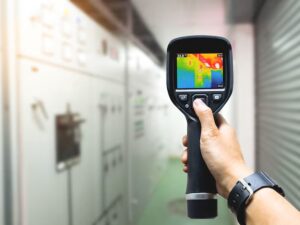



- The Machinery Lubrication CAT-I course is most beneficial for maintenance, reliability, and operations professionals who are directly responsible for lubrication tasks.
- Planners, supervisors and managers, and others can also gain valuable insights into lubrication program gaps, cost-saving opportunities, and data-driven decision-making from this course.